Small
Thin
Almost invisible
Yet so
Powerful.
The driving force
Behind so much
Beauty
From flags of nations
To prom dresses and saris
To curtains and pillows and bedsheets
To baby bonnets
And baseball gloves.
Needles


This blog is about the little and big thoughts that pop into my head. I once read that when Flannery O'Connor walked into a bookstore, she would want to edit her published works with a red pen. In the digital world, we have the luxury of tweaking things up after we've hit the publish button. I can be a perfectionist/procrastinator, where waiting for the ideal means little gets done. Here I will share what is not--and likely will never be--perfect.
Small
Thin
Almost invisible
Yet so
Powerful.
The driving force
Behind so much
Beauty
From flags of nations
To prom dresses and saris
To curtains and pillows and bedsheets
To baby bonnets
And baseball gloves.
Needles
I bought Spare. It should arrive tomorrow.
In case you have been living under a rock, Spare is the Prince Harry's memoir.
Initially, I wasn't going to read it because I thought it was going to be stupid and I am a snob and I didn't want to read some schlocky celebrity memoir. Then, I read The New Yorker review, which favorably compared Spare to Hamlet.
I was not expecting that.
(I am not expecting Spare to end in a bloody massacre, but maybe it will end with a metaphorical massacre, like people get cancelled, the modern day version of murder. Instead a poison sword, people get the sharp end of a poisoned pen.)
Harry's ghostwriter is J.R. Moehringer, and it sounds like he is a really good writer. Rebecca Mead, the reviewer for the New Yorker, loved most of the book but she said it drags in parts where Harry has to talk about every single insult from the British press. Other than that, she said the rest of the book is well written.
This reminds me of my friend Eleanor Owen who died last year at 101. First, she was a Shakespeare fiend. She knew the complete works inside and out. I'd love to get her take on Spare. It also makes me think about her own memoir, The Gone Room. I read dozens of drafts of chapters of Eleanor's memoir before it was self-published, and I loved the bits and pieces. We would share pages of our writing via email and then a week later, we would meet for lunch at her beautiful old house in Roanoke Park and have homemade lentil soup.
The story takes place during the Depression as Eleanors mother support's her eight children on the farm in Upstate New York after her unstable husband disappears. In my mind, Eleanor's story is about a strong-willed and resilient matriarch's forgiveness of her daughter. Eleanor was responsible for watching her younger brother when he was hit by a train and died.
What could have been a beautifully written tragic tale of forgiveness got lost in Eleanor telling too many stories about the names of her chickens on the farm.
Okay, that is a bit of an exaggeration and I love Eleanor. Nevertheless, she could have used a ghostwriter who would have taken her beautiful life and her beautiful words and make into a beautiful story.
Likewise, Harry's "ghost"writer (get it? "ghost" writer like ghost in Hamlet who is Hamlet's dad who tells him to kill Claudius...) had this beautiful story of the second son, and then the second son wants to rant about the press and how he got frostbite on his wanker and all of this random shit. I want to read the Director's Cut version of the book, you know, sans interruption from the subject himself, naming all of the chickens.
One of my friends from India used to read a lot of British literature and history, and she had different perspective on British and American history than I did.
"America was created by the second and third sons of the British aristocracy. They couldn't inherit land, so they left in England to find their fortune and then they formed the United States," she told me. This version was skipped over in U.S. textbooks in favor of the Pilgrims and religious freedom.
In that context, it makes sense that Harry, the Spare, moves to the U.S. like the other second sons who crossed the Atlantic centuries ago.
Alright, the real reason I want to read this: I want to see exactly how messed up the Royal Family is. After sending my own kid to treatment and getting a divorce, I want to see how it could be worse.
Honestly, I think the elephant in the room in the late queen. I am not spilling any secrets here--I've seen a few episodes of The Crown--the woman had some control issues, kind of by definition because she was the queen. And it wasn't just her, but the whole idea of "This is how things are done." That is the opposite of peace and freedom and serenity. The only way to survive in that environment is to act in, act out, or to get out.
I also feel for the Royal Family, not because they are royal, but because they are a family and sometimes families are really messed up. Harry went to therapy after his mother died, and probably isn't too different than the kids at Pedro's boarding school. They got there because they were troubled, and then the families had to face with their own dysfunctions. According to Pedro, the kids who got better were the ones whose parents did their own work, who faced their own faults and flaws. Those whose parents blamed the kids for their own problems struggled because their parents never took responsibility for their own actions.
Harry is calling bullshit on his family. I feel for King Charles, having his son call him out and everyone else out. I get it. I've been there, with my kids calling me on my crap. When I didn't listen, they yelled and screamed and acted out and got louder and louder. When I sat quietly and listened, they felt seen and heard. Writing a book about your messed up family is screaming.
I am curious to read about this, and see how it all turns out.
The world should have divorce funerals, like a wedding, but the opposite. It would be a way to honor the end of a relationship, whether the relationship ended amicably or badly. There is a Netflix series Uncoupled about an Indian couple divorcing. They had a ceremony with friends and family that "celebrated" their amicable separation. For those that have difficult or toxic relationships end, there can be an event without the other spouse present.
I wonder if this would provide a healthy sense of closure, and allow us to wish our ex-spouses well. My friend has been divorced for three years, and she just heard word that her ex is doing remarkably well. He got sober and has a great new job and a stable girlfriend. I was like "Oh my god isn't that just the worst! He finally got his head out of his ass after you divorced him? Why couldn't he do that when you were married?"
Her reply: "I am happy for him."
And she was, no bullshit. My greatest fear is that my ex would do a 180 after I got divorced and all of the things that used to bug me about him would be resolved, that he would see the light. So why is that my fear? Shouldn't I just wish him well and hope his life goes well? I don't wish him misery or to fall prey to alcoholism and disaster. Even without me in his life, I wish him well.
The hardest part of divorce for me is Saturday nights. Saturday nights are like a weekly Valentine's Day, where people couple up. For a middle aged woman like me, a majority of my friends are either married or dating or have children at home. Every other day or night of the week is open for friends. Not so much Saturdays.
I need to get over my freak out about Saturday nights, and just view it as a regular time. Sometimes I have plans, but not always. The ironic part is so often the rest of my week is jam packed, that Saturday nights are the few times I have to spend by myself. I should enjoy this time to work on projects or cook or read or make a fire or take a bath and just relax. See? Doesn't that sound nice? Why do I need to convince myself of that? I've actually had fun going to dinner alone, sitting at the counter. I've met some interesting folks, many visiting Seattle from out of town.
On another note, this afternoon I bought some art at the gallery in my neighborhood.
Because I wanted to.
Because my dad said I should treat myself.
One painting reminds me of my mom. It is a really cool picture of flowers scanned and called "Remembering Grandma." When I saw the picture online, I immediately knew I wanted it, both for the picture and the title.
The other painting, "Nesting in Red," resonated with me and my new life after divorce. It is a monolith, where the artists creates a painting on plexiglass, and then puts paper on top and sends it through a press. (Watch the artist in action in the video at the bottom of the page.) This is process super risky -- the result after pressing the plexiglass and the paper together could be beautiful or a mess. So much like life, eh? This painting has a red background with a cheerful yellow and black bird near a flower arrangement. I feel like I am the bird, floating in space. I can't tell if the bird is coming or going, giving or taking. Maybe I am the bird. A friend of mine said after her sister died at too young of an age, that even though she was grieving, the birds were still singing. Divorced or married or single or whatever, I am still me. I am still moving and breathing and living.
Just like the bird.
My father and I buried my mother a week ago, and I am still in Ohio, as life returns to normal. We had a big post-funeral road bump when my father became ill with an infection. I've had three people say it is normal to get sick after a stressful event. The immune system is in overdrive when we are under pressure. As soon as we relax, so do our internal defenses and wham--germs have a field day.
I'd been driving my dad back and forth to the hospital, listening to the radio in Columbus, now called "C-bus" by teens, hipsters and newscasters. Either "Columbus" is too hard to pronounce or more likely, Ohioans discovered their namesake Christopher Columbus was exceptionally violent man, inclined to torture and pedophilia, much more so than other European explorers who sailed across oceans hundreds of years ago.
So am driving around C-bus, listening to the radio. My dad has news radio dialed in in his car, and damn it I wanted to listen to music. I found five or six stations, and each was playing songs from when I was in middle school, high school or college, or earlier.
It was like I driving in Brigadoon, where C-bus radio was trapped in the past by a few decades. It is as if when I left, the radio stations stayed the same. Eighty percent of the songs were by groups like Culture Club, Phil Collins, Van Halen, Aerosmith, AC/DC, and a bunch of one hit wonders, like 'Til Tuesday. I heard one song each from Taylor Swift and Ed Sheeran. That was it. I wanted to start taking notes, tracking the songs and the every, and then conducting some kind of analysis to see if my intuition it rooted in fact.
My senior year of high school, the school musical was Brigadoon. Where they trying to tell me something, like you can leave, but we will never change? Is my hometown like a fictional Scottish village that appears once a century?
Watching someone
live with Alzheimer's
is like watching them
die in slow motion.
The mind goes
the body stays.
We say good-bye
long before
she leaves the earth.
My mother is dying.
For real this time.
We think.
She's had a decade with Alzheimer's. Her conscious mind left her body years ago, but her heart still beats.
Now she can no longer swallow, eat or drink. She is effectively in a coma, sleeping all day, not responsive. In this state, she can feel no pain. I spoke with Rhonda today, the nurse who has been caring for my mother--and my father--for years.
"She could have a week," she said. I was surprised that anyone could live that long without water, but I guess it takes a while for the body to shut down. Plus, she is expending almost no energy. It doesn't make much fuel to keep what is left working.
I have a hard time believing my mother is going to die this time because we've had close calls before and she rallied and pulled through. My mother is a tough cookie. She survived Covid in June of 2020, early in the pandemic when it was slaughtering its way through nursing homes. In my mother's memory care unit that season, more than eighty percent of the residents died of covid. It was brutal.
And my mother lived. I think one of my Chicago aunts has a vicious prayer circle going for my mom 24/7. I am not sure what else would explain this and other medical miracles.
Yet, no one lives forever. This is her time, and her death is on her time. No one knows when she will pass. We can't plan or predict, which is so contrary to our modern lives, when we get upset when the planes, trains and the rains don't arrive on time. Death makes fools us all, making us wait and wonder without schedule. I am learning patience, waiting without worrying about logistics. When the time comes, I will figure it out.
My mother loved to build fires. Let me emphasize "build," not "start." "Starting" a fire means you light something up and let it go. "Building" a fire means you start the fire and keep it going. You maintain, tend and care to the fire.
When we would go camping as a family when I was a kid, we'd arrive at the site and my brother and I would first hit the woods and look for kindling while my parents set up the camper. Friday night, she'd start a fire that would last the weekend. To my mother, building a fire was an art form, with several factors. It needed to look good and burn hot with minimal smoke.
She passed her love of fire on to me. Pedro is a third generation pyro, learning to build fires from sticks and rocks in the wilderness.
Tonight I was talking to Pedro about his grandmother, among other things. He had a busy day, and I spent the whole day talking on the phone with family and friends, plus dealing with a flat tire. It is a quiet and cold and snowy night in Seattle. When I told him I was tired and debating between going to bed and starting a fire, he said without hesitation
"Build a fire."
So I did. He must have known in some deep, spiritual place, that was exactly what I needed.
A fire.
My dad wants to see pictures from my trip. Here ya go! (I'm too tired to caption them all and put them in order.)


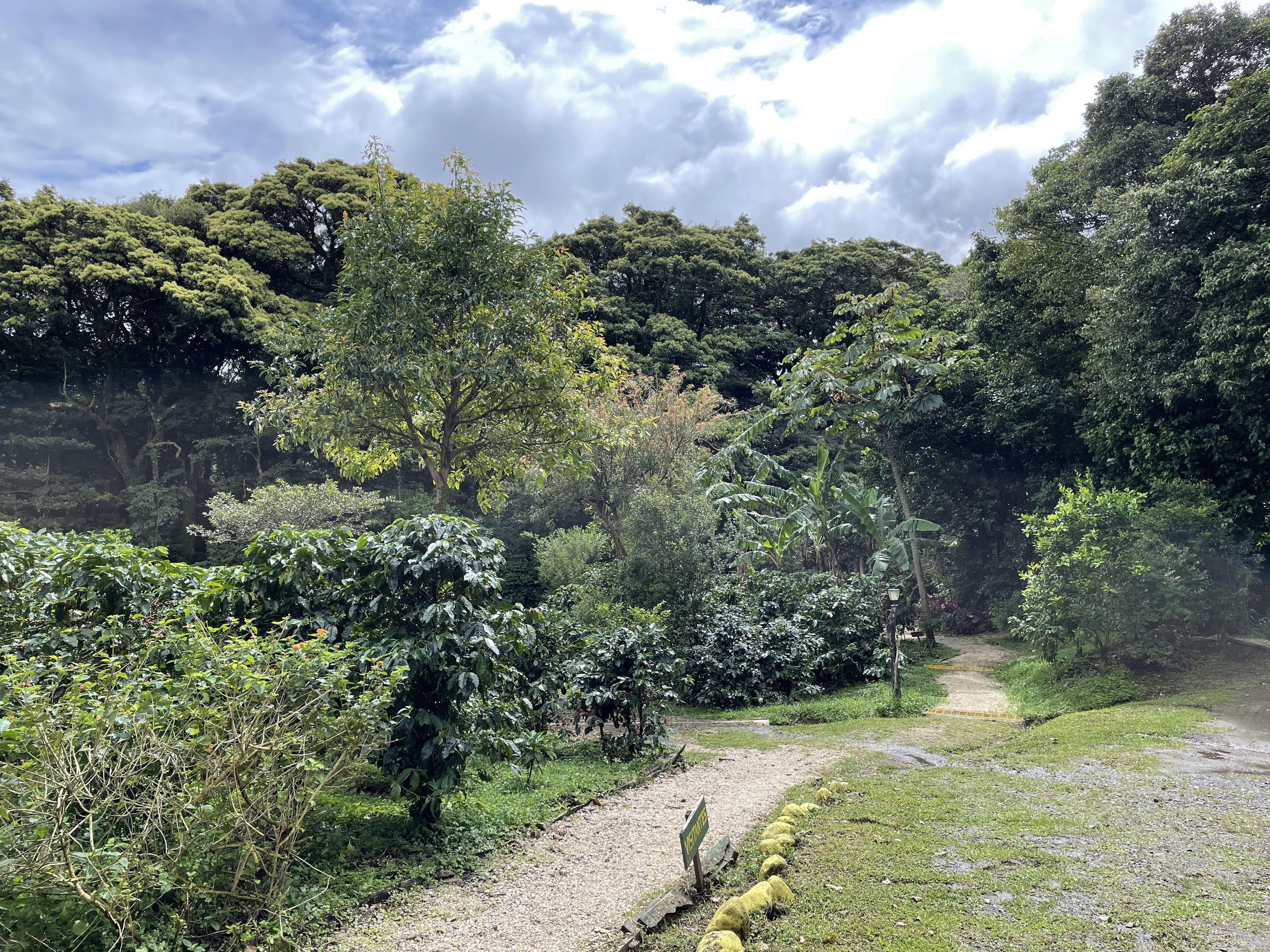


[Spoilers ahead, but the movie has been out for more than ten years, so yeah.]
Flying back from Costa Rica, I had a seven hour flight from Miami to Seattle.
It was a long flight.
Since it is World Cup season, the airline had a bunch of soccer movies, including Fever Pitch starring Colin Firth and Bend It Like Beckham. (As much as I love Colin Firth and Nick Hornby, I couldn't get into Fever Pitch.) After Bend It Like Beckham, I watched The Damned United starring Michael Sheen about the soccer manager Brian Clough, considered the greatest manager in England. It was crazy good, probably one of the top ten movies I've ever seen. I don't know how true the movie is, but it is a good story of a guy before he became a legend.
Brian and assistant manager take an obscure, last place team and raise it to the top of the field. Along the way, Brian gets ignored by the legendary coach Don Revie of the Leeds United, the best team in the England football league in the 1960's and 1970's. When Revie is asked to lead England's national team, Brain is asked to coach Leeds United. He thinks Revie was a dirty coach, and he vows to clean up Leeds, so they can win but win honestly without cheating. As Brian's success grows, he becomes more confident, cocky and arrogant. You know the expression you can catch more flies with honey than vinegar? Brian didn't. He ultimately gets fired after forty-four days as coach of Leeds.
There is a scene at the end where Don Revie and Brian Clough are interviewed on television together after Brian has been sacked. It is a tense interview where Don asks Brian if he treated the members of the Leeds team like family, was he kind? Brian looks perplexed, dumbfounded, but was the interview goes on, seems to realize the answer to the question "Am I the asshole?" is yes. Brian is being called out by his nemesis for his miserable behavior.
Brian got the point, and groveled back to his assistant manager to work with him again, going on to become a successful and beloved coach. Revie's career ended in scandal.
So often the point of movies is watching people change, grow and develop into better human beings. So often, the protagonist has a eureka moment, the lightening strikes and voila! the person is changed, enlightened. This rarely happens in life.
Both men were called out by each other, but one of them took it to heart, and the other did not. Everyone at some point of their life is a jerk, a schmuck, an asshole. The question is what do we do with that information? Do we say, yeah, I know, but so what? I was born this way. I can't change.
Or, can we face our weaknesses, admit we were at fault, and then try to be better. The failure of Brian wasn't getting fired after forty-four days at Leeds. The failure would have been if he learned nothing from the experience.
Beetles have poor evolutionary design. Last night on the balcony at my hotel in Costa Rica, a beetle flew against the wall and landed on its back. This morning when I woke up, it was still on its back, scrambling its legs to right itself, which wasn’t going to happen.
I found a piece of paper and flipped the bug right side up. It was stunned for a bit then then flew away.
I just remembered beetles have wings under their shell. Why don’t they just open the shell and use their wings to flip themselves up properly?
