Monday, July 19, 2021

Newton's Fourth Law of Therapy & Why I Meditate

"For every problem in the child (identified patient), there is an equal and opposite problem in the parent."

                                                                                        -- Pedro's Fourth Law of Therapy

A friend of mine recently asked me about my meditation practice. We didn't get a chance to finish the conversation, but my first thought was because meditating doesn't cause a hangover like gin and tonics do.

I'm kidding.

Sometimes you can get a meditation hang-over.

I'm kidding again.

I meditate because it clears the noise and busyness in my mind, giving my soul a chance to speak. 

In Hidden Wholeness: The Journey Towards an Undivided Life, Parker Palmer writes about his battle with depression. While there are dozens of reasons why people get depressed (and cures), he describes his own depression rising from "burying true self so deep that life becomes one long, dark night of the soul." His depression "was the soul's call to stop, turn around, go back, and look for a path [he] could negotiate...When I was living my outer life at great remove from inner truth, I was not merely on the wrong path: I was killing myself with every step I took... We can reclaim our lives only by choosing to live divided no more. It is a choice so daunting...that we are unlikely to make it until our pain becomes unbearable, that pain that comes from denying or defying our true self."

I meditate in the hopes of aligning my inner and outer life, and meditation is one of my many hedges against insanity. My flavor of crazy isn't depression -- it is a spinning and obsessing mind, constantly trying to avoid and control and figure things out so nothing bad ever happens, which is impossible. Bad things do happen. Of course I want to be careful and not careless, but there should be a word that means being too careful to the point of failing to thrive. My favorite elementary school teacher Ms. Kolin affectionately called me a worrywart. If she had seen me two years ago, she would have called me the worry-melanoma.

I can hide my worry-wart-ness from the public and co-workers, but privately I can spin and spin and spin, which is unhealthy, not just for me but for my kids. See the Fourth Law of Therapy: for every problem in a kid, there is an equal and opposite problem in the parents. In the past two years since Pedro was away, I've had a lot of time to do my own inner while Pedro was doing his. 

Unfortunately, there isn't yet a drug for worry-wart-ness. The only way out for my disease is through. 

And so I meditate.

Sunday, July 18, 2021

"Professional"

I was at coffee the other day with a new friend I made during the pandemic. She has a kid about Pedro's age and we were comparing notes about teenage boys. This mom is super smart and well educated, just like most of my friends. (I would never say I have dumb friends. Why would I be friends with someone if I thought they were dumb? That makes no sense. I do however, have some friends who never finished college, and that is fine, too.)

Where was I? This woman is also a professional. She has a professional job and is very competent at what she does.

Competent.

You know how sometimes you are sitting across the table with someone for coffee and you realize you are looking in the mirror, and you discover something about yourself that you NEVER saw about yourself until you sat down with them? Recently, I went to dinner with a friend and we had butterscotch pudding for dessert, passing up carrot cake and some decadent chocolate thing. I would never order butterscotch pudding ahead of anything chocolate.

And the butterscotch pudding was delicious. See? I learned I like butterscotch pudding! Who knew? I also realized I like cocktails better than wine! Again, who knew?

Back to the main point. We often learn about ourselves through other people.

This woman was just like 95% of the moms in NE Seattle. There is nothing unique or exceptionally different about her: all women in NE Seattle are exceptional and unique. 

I have had the same conversations with many moms over and over again. Maybe this distance in time and space from the quarantine allowed me to uncover this. Maybe it is because I no longer live in NE Seattle. 

As parents (moms aren't the only ones who do this), how often do we apply a professional approach to dealing with our kids? How often do we treat them like colleagues instead of kids? How often do we connect with our kids head-to-head, and not heart-to-heart? Our children might come crying to us with a broken heart, and we give our kids an intellectual solution?

How much of our professional culture has infected our homes? Kids aren't residents or fellows or interns or Analysts in our families. We aren't there to train them in the ways of the professional world.

I grew up in home where my dad was a professional. He does my taxes (thankfully) every year and he offers me advice on how to manage this long-term care insurance law that is hitting the State of Washington. All of that is well and good, but what I most love about my dad is I can call him when I am happy, sad, frustrated and/or thrilled with the world. (I mostly call about the things I am frustrated, worried, annoyed or sad about, TBH.)

Does he respond to me in a "professional" manner, giving me advice? Nope. He just listens. He meets me heart-to-heart.

Where did me and my friends lose our way? Did we fell like we needed to raise our kids to become professionals, so therefore we must treat them as such?

I need to stop. I need to focus more on being a mom and meeting my kids where their heart is at, not as much their heads. School and work can and will meet them where their heads are, but they won't meet them where their heart is. That is why we have family and friends, people who care about us and want to understand our hearts.

Saturday, July 17, 2021

Lily Pads and Lotuses, and the Wonder of the Water

This evening I took my paddleboard to Green Lake and I actually stood up on it. 

Yay! Go me!

Below is a map of my excellent adventure.

I started up at the northwest corner of Green Lake. The water was calm and still so I decided to stand. Which is the first real time I've stood on my paddleboard since I've owned it. When I paddleboarded in Tofino on Vancouver Island, British Columbia, I stood up just fine. Since then, I've gotten a case of the jitters. I don't feel so bad since 80% of the paddleboarders I see in Seattle are also sitting. Standing was fine, except I couldn't look around. I was too focused on the water directly in front of me instead of looking around for birds.

The yellow line is where I stood on my paddleboard. The green is where I sat. At the end of the first yellow, I heard the wind roar through the trees and punted--I was back on my bottom.

As I turned south, the wind and the waves picked up. My paddle board rocked in the water, but I was moving along fine. I had to paddle on my left side to keep my board going in a straight line. As soon as I switched to my right hand, I was turning and heading straight back to shore. This is interesting, I thought. it was harder than I thought, but I was doing okay.

Part of my problem is that I didn't really think of Green Lake as a real lake. I've walked around it hundreds of times since I moved to Seattle, but this is only the second time I've been in or on the water. I had thought of it like a Disneyland lake or something equally contrived and perfect and not impacted by forces of nature. I mean, it is not like Lake Washington or Lake Union or the Puget Sound. I had thought those were real bodies of water. Green Lakes was like--meh--not a real lake. The first time I paddleboarded on Green Lake last weekend, it was easy-peasy. The weather was hot and sunny and water was calm. There was a gentle breeze. Most of the people on the water were laying down on their paddleboards either sleeping or sunbathing. 

Not so today. The wind and waves were such that if I stopped paddling I would have drifted to shore.

"This is kind of hard," I thought realizing that Green Lake is a real lake. If I am struggling on this glorified pond, how on earth did people manage to get across the ocean before steam engines were invented? I started humming Row, Row, Row Your Boat to myself to distract myself from the wind and waves.


Once I got to the south end of the lake, I turned around to head back. I wanted to paddle past my favorite part--the lily pads and lotuses.

Except I couldn't. 

I turned around just fine, but I was rowing against the wind and the current, which were not subtle. I looked to the shore and I saw a father and daughter walking. I paddled and paddled and I looked at the shore again.

I saw the same father and daughter, except this time they were watching me. That was when I realized I wasn't moving. I paddling and staying in the same spot.

Which totally sucked.

I wanted to go to the lily pads and then back to my car, but the wind and water had other plans.

I was at the opposite end of the lake from where I parked my car. I seriously considered taking my board ashore and walking a mile and a half carrying my paddleboard back to the parking lot. The paddleboard isn't super heavy, but it is cumbersome. It is a pain in the neck just to get it the 200 feet from the parking lot to the water. I didn't think I'd make the mile walk. Maybe if there were an unexpected thunderstorm I would have gotten out of the water, but this is Seattle. We don't have thunderstorms.

Instead of paddling towards the lily pads, I went in a direction that I could go, where the wind and water would take me. I ended up heading straight north, and I was able to clip along fine without getting stalled.

I still wanted to see the lily pads, so once I made it far enough north, I tried to cut over to the left.

Success! I saw the lily pads! I started to stall a little bit again, so I got back to a spot where the water and wind would take me.

I paddled past Duck Island, where I saw a dozen ducks going home after a day of ducking. Just east of Duck Island, the wind was minimal. I took off my shoes, tucked them into my bungee cords and stood up. I paddled my way back to the launch spot.

In typical Seattle fashion, I saw both a beautiful heron standing majestically on a log, and a rat scampering along the shoreline, probably cleaning up after a day of picnics at the park.

But that is the wonder of the water.

Wednesday, July 14, 2021

If I Could Re-live a Year...

This week, I was talking to a prospective mom for my son's former therapeutic boarding school. It is not uncommon to get phone calls from these parents, especially during the pandemic when it was impossible to visit programs in person. 

Like many of the moms who call, this one was a train wreck, bless her heart. Looking back, I am sure I was worse when the Boy was at the same stage. 

Instead of talking about the school, I told her more specifically about my own experience:

"I wish someone had told me cold when I was starting this that the best thing any parent can do is take care of their own problems. Address that drinking issue. Get help for the workaholism. Figure out how to get rid of your co-dependency. Dig behind your ego and emotions and find your soul. If nothing else, take care of the basics: meditate, drink enough water, get enough sleep, find community and exercise."

When I was done talking to her, I thought about what I was like back then, before the Boy was sent away. I wish I had known then what I know now. "Experience is the comb nature gives you after you lose your hair," said my 9th grade English teacher. 

I know I am supposed to live in the present, blah, blah, blah, but as a thought experiment I wondered if I could relive a year of my life, which year would it be? A year that was fun and nearly perfect, or a year where I struggled and stumbled?

I came down to two: my freshman year of college and the year the Boy fell apart.

My freshman year of college was good. It was fun, I learned a lot about myself living on my own for the first time, minus the need to pay my own way. It was filled with collective effervescence

As far as bad years go, I would definitely skip the year Ada died, the year my brother's mental health imploded, and the pandemic, but maybe I would relive the year the Boy went away. It was so hard and heart breaking, but if I could go back and do it again with what I know now, I would have been so much more peaceful, calm and serene. Maybe some of it would have rubbed off on the Boy, helping him heal faster. I think about how much I obsessed that year, about everything and everyone instead of focusing on myself. I think of all of the bad habits I've since broken. Would I want to relive this year as a test, to see if really could do better? Maybe I just imagine that I could have handled it all, but maybe it really wouldn't be that different?

Maybe I wish I had learned what I needed to learn faster, but that is the challenge of learning as an adult--I don't often learn things until I am forced, until the status quo is too painful that I am forced to grow.

Tuesday, July 13, 2021

Fall In...

At two weeks ago, Pedro was giving me crap about a lot of things:
  • How come you didn't take a fly fishing casting lesson before you went to Montana?
  • How come you are not doing your skiing exercises (aka "Leg Blasters") so you can ski something other than green runs?
  • If you really what to motorbike through Moab, you need to learn to ride a motorcycle. How come you haven't take motorcycle lessons yet? Do you need motorcycle lessons even? Why can't you just go out there and ride?
  • Why don't you take your paddleboard out more? Why don't you standup on the paddleboard instead of sitting? You don't need a lesson. You just need to stand up, fall in and get back on the board.

Yeah.

He is right about all of these things, but he was--in his own words--"shitting on me." He was downloading a long list of things I was doing wrong and giving me advice on how to do them better. 

I walked along side him and nodded, listening to what he was saying, not telling him to mind his own business, that I can live my life as I see fit.

I felt myself slipping back into old, crappy patterns of co-dependency: not standing up for myself, taking the BS people dealt to me without thinking about it. "Just because they are giving it to you, doesn't mean you need to take it," my friend Ellen has said. That is true, and easier said than done.

What is the truth, though? Were those things my truth or were those Pedro's truth? He wants me to ski and fish and paddleboard--do I want those things too? Sure. I love to ski, but do I love it enough to do Leg Blasters every other day for six months? As of now, no. Do I need to make dinner after work instead of paddleboarding? Maybe I could skip dinner and paddleboard instead.

Part of Pedro's direct commentary on my life might come from living in therapy land for the past two years where direct conversation between the kids in his program was encouraged, even celebrated. Perhaps he is thinking of me as one of his former roommates, where he did tell them the truth as he saw it, and they gave it back. Maybe after many years of me being a parent to Pedro telling him what he needed to do, he feels like he can return the favor. 

Oy. That was not exactly what I had expected as my boomerang or karma gift, from parenting.

In time, I will change from sitting on my paddleboard to standing. First, I need to welcome and embrace falling in the water. I need to trust that I can get back on the paddleboard after I fall.

Parents are suppose to teach their kids new things, to let them know it is okay to fall, to encourage them to get back up. And after being away for two years, Pedro is doing that to me.

As American parents, how often do we encourage our kids to try and to fail and get back up, but all from the safety of the sidelines? Pedro never watched me on the soccer pitch. He never saw me run a cross country meet or perform in a band concert.* Yet, we expect and push our kids to perform.

Why did I feel so uncomfortable when my kid pushed me to do what I have been pushing him to do all of his life?


* I was in a dance recital as an adult. I'll have to find the blog post on that wild and crazy experince.


Thursday, July 1, 2021

Addiction and/or Codependency & Meeting in the Middle

My friend Delaney is a doctor and a writer and a filmmaker. Her primary creative topic is mental health, writing and filming about her father's battle with schizophrenia and her kids' addiction to screens. 

Recently, she wrote a blog post with which I whole-heartedly agree: When We Judge Moms About Their Children's Mental Health. She writes about three sisters, one who has a child with mental health issues. The other two sisters blame and judge the mother for her child's problems, saying if she hadn't gotten a divorce or been such a free spirit her kid would be fine, which is of course, bullshit.

As a parent of a kid who was in treatment for two years, I agree we shouldn't blame or judge the moms. Delaney said we should have curious compassion, which is a great way to treat someone who is in the depths of a struggle instead of blame. This is all well and good.

Yet, I don't think parents should be let off the hook or get a free pass when their kid has problems, even in "good" families. And what do we mean by "good" families? They are affluent, well-educated, polite, civilized, professionals? Not that that are warm, kind and sweet?

Since Pedro has been home and since my visit to Montana a few weeks ago, I realized a few common denominators of many of the families in Pedro's program.
  • They come from "good" families where at least one of the parents is (or was) a leader in their field.
  • At least one parent has an addiction or co-dependency from growing up in a house with addiction or other dysfunction.
  • The parent with the addiction is high achieving, thereby making it easier to mask the addiction. 
  • Perfectionism is part of addiction, and as much as it is hard to live with a perfectionist, sometimes the right type of perfectionist can be very successful professionally.
It is hard for a high functioning, high profile person with an addiction to hit rock bottom. There is no vomit. They show up at work on time, ready to go. They might be loved by their colleagues and friends who don't see the addiction. I had a friend years ago who had an addiction to pain killers and whose husband was a narcissist/psychopath. She was kind and lovely and her family life was a complete shit-show. I saw her every day as our kids went to school together. It took me two years to figure out she had an addiction and her husband was a nutjob. Two years. I don't know if addiction is easy to hide or that I was blind to it. Nevertheless, her son had a truckload of problems and they got him into all of kinds of therapy, none of which worked because the root of the problem--addiction and psychopathy in the parents--was never addressed.

Not all kids collapse in a house with addiction. Some kids are like canaries in the coal mine: they wilt and struggle and suffer when they are raised with addiction. Other kids survive better. Think orchid versus daisies. Orchids need specific conditions to bloom--the proper amount of light, water, temperature. Daisies need water, sun and a patch if dirt. They are hardy and survive all kinds of conditions. The kids in treatment are orchids. They suffer without stability and consistency.

Back to my friend Delaney. I agree with her that we shouldn't blame or judge parents when their kids struggle, but families and parents need to look at themselves. What pain are they trying to avoid? What unhealthy ways are they trying to cope?

What happens when parents get better and do their work along side their kids? The parents get better and the kids get better. Pedro told me that the kids who do the best in his program are the kids whose parents do their own work. Part of me felt bad about not finishing all of the parenting books I bought before he came home. Instead, I was working on my own co-dependency problems. I was cleaning up my side of the street. And it was the better thing to do. I am sure those books have lots of wisdom, telling the parents they need to change. But do they ever spell it out for parents, in black and white, and say "YOUR ADDICTION AND/OR CODEPENDENCy IS PART OF THE PROBLEM. GET YOUR SHIT TOGETHER AND LIFE WILL BE BETTER. Life won't be perfect, but you need to leave your perfectionism at the door. Don't bring it in the house."

No, they never tell parents this.

Why? Because we don't want to blame or shame or judge parents of kids with mental health issues which is all well and good, but because of that we are closing the door on honest conversations about how families and people and emotions work.

So how do we bridge this gap, between not blaming the parent but getting the parents to honestly look at themselves and see that addictions and co-dependency are killing their families? 

Why did teen anxiety and depression gone up during the pandemic? Why did alcohol consumption for adults -- especially women -- rise during quarantine? Is there a possible correlation between families who spend all day together now exposing each other to their addictions and co-dependencies? Are addictions in general on the rise for parents and therefore more pressure on kids to cope and therefore the kids become more depressed and anxious? 

What can we do as parents to support each other when our kids fall apart? Perhaps is having honest conversations about how we got to the other side, that my son didn't come back from therapy fixed and problem solved. I did my work, he did his work and we met in the middle.

Tuesday, June 29, 2021

Heat Wave and Prayers and Driving

Seattle has just had two of the hottest days ever recorded, and I don't have central air conditioning. I have a portable AC to cool off my bedroom, which is helpful but not sufficient. At 4:00 a.m., the temp in my townhouse was 83 degrees. I am sitting in my living room with all of the doors open to the cool night air and the temp has dropped to 76 degrees in fifteen minutes, hopefully making it bearable inside for tomorrow later today. Opening the doors and windows at night is my work-around, and it works well enough, except for being awake at 4:00 a.m. when I have a presentation at work at 9:00.

So Pedro is living with me after being "sent away" for two years. I feel my old anxiety creeping back, hoping that he is okay. Prayer and mediation is part of my recovery program, so last night I decided to pray. Technically, we are only supposed to pray to know our higher power's will for us. Instead, I made a laundry list of what I wanted. Pedro starts his first job this week and will apply for his drivers license, both which cause my anxiety to rise. I swear to god that parenting a young adult is the most stressful phase of parenting ever. He is off on his own to work, to drive and then to live.

So I prayed last night, "Please don't let anything happen to the Boy."

Right?

Thankfully, my higher power/inner voice kicked in and said, "You can't be serious."

Please don't let anything happen to the Boy. That is the worst prayer ever. That is like asking for him to be sealed in wax and made into a statue and never leave my house. Just to sit there and let nothing happen. How boring and selfish. Maybe I could have asked to keep him safe from harm, that might have been better.

Better an even better prayer would have been "Please help me to chill the fuck out as my kid goes out into the real world."

Why am I worried? 

Because I am a mom.

Because he has been gone for two years and I have missed so much of his growth.

Because he drives like me.

Let's dig a little deeper into that last one, shall we?

I drive a high performance car, which I love. It is fast and it has great maneuverability and acceleration. The Boy sees me zipping in and out of lanes on the highway, passing people who dare to drive close to the speed limit. He swears at slow moving cars and drivers who make dumbass moves like making a left turn from the right lane. Just like me.

Oy.

So this weekend I was driving with Pedro and I decided to exhibit extreme amount of patience and serenity behind the wheel. I was on 520 behind a few cars and a FedEx truck going 45-50 mph. And I didn't pass the line of traffic. I patiently sat behind the slow moving vehicles. I didn't swear. I didn't fuss. I even said aloud that I was going to be patient.

And it paid off. The next time he drove, he drove like the improved me: calm, steady and not maxing out the capabilities of my car.

I need to revamp my prayers to be a better example to my son. Then maybe I could chill out.

Thursday, June 24, 2021

Not Ordinary Time and Work from Home

The Catholic Church has three seasons: Lent (before Easter), Advent (before Christmas) and Ordinary Time. Ordinary Time is the non-holiday part of the year.

Pedro is home, staying with me at the condo. His return home has not been Ordinary Time. In many ways, it feels normal to have him back in my life, around for breakfast, lunch and dinner. Yet, his transition back home and my return to motherhood feels like a holiday, a cause for celebration. I feel like the parents in the Prodigal Son, killing the metaphorical fatted calf upon his return. 

"I feel like I am spoiling him. We are eating out all of the time and getting carry out," I told my friend Ellen whose daughter was "sent away" a few years ago.

"Of course you are," Ellen said. "That is perfectly normal." For a situation that isn't normal to start.

For once I am glad I am working from home. I get to see Pedro during the day and eat lunch with him. We chat between meetings.

So far, so good. I am enjoying his company. I like having him around. I am comfortable emotionally, not stressed or obsessing. The fact that I don't have a lot to say is a good thing.

In fact, it is wonderful.

Saturday, June 12, 2021

Sleep

I've been in Montana now for more than a week and my major "accomplishment" (which is not the point of vacation) has been catching up on sleep.

Last night I slept for 10.5 hours. I went to bed at 11:15 p.m. and woke up at 9:38 a.m.. Most other nights on this trip, I've gotten at least eight, often nine, hours of sleep. I had two nights of insomnia, but those weren't that bad. One morning, I woke up a 6:30 a.m. to go fly fishing.

I've really enjoyed catching up on sleep. At home, I started a new job about three months ago and I start work at 8:00 a.m. compared to my old job which started at 9:00 a.m. Getting up and ready an hour earlier than usual has been an adjustment.

Why the restfulness? Am I more tired than usual? Am I exhausted? 

The past two years (and more) have been exhausting, stressful, and depleting. The time has been spent recovering and learning more about myself, how I tick and why I act the way I do. In some ways, the time has flown by. Life was easier knowing Pedro was being cared for and learning to care for himself. At times, I felt like a failed mom, that I had to outsource parenting to an outside organization. Other times, I felt like the challenge of raising Pedro more than most parents could handle, and there was no shame in seeking help. 

Why the restfulness? Am I more anxious and depressed, and therefore sleeping more? Is my body preparing for the stressful weeks ahead of having Pedro home?

One of the symptoms of depression is sleeping more. I can't say I feel depressed, but I know I am stressed about bringing Pedro home. I know there will be hard times, that I will have to exercise setting boundaries in ways that I never had to before. This will be hard. Before when I set boundaries with the Boy, I feared alienating him, that perhaps we would be estranged forever. In the past few weeks, I have set some hard boundaries. I did not rescue. I did not rush to jump in and save him.

And it was fine. He didn't hate me for setting boundaries.

Why the restfulness? Am I more at peace, so sleep comes more easily? That after more than two years of helping my breath, I can finally relax?

Perhaps this is the best answer.

I feel good about my progress and the Boy's. He worked so hard for the past two years, taking his therapy seriously. I give him credit for all of the work he has done. I give myself credit, too. I have done quite a bit of inner work, and I have grown in ways that I have not expected. Most of all, my mind has stopped spinning. At times--often actually, I am thinking of nothing. My mind is quiet, still, something I don't think I have ever experienced in my life before. At first when the spinning stopped, I felt dull. When I told my therapist my mind stop spinning, he said, "You are feeling calm. That is normal."

Perhaps the best analogy is I feel like I have come back from a long and arduous trip, and I can finally sleep in my own bed again. I remember coming home from camping trips as a kid, and crashing into sleep. It felt so good to rest.

And so I feel the same now. It feels so good to sleep.

Wednesday, June 9, 2021

Bookends

Thursday night, the night before Pedro graduated from high school, I dreamt he died. He was out somewhere and I went looking for him. I knocked on a strange door and I said "He's dead, isn't he?" The person who answered the door didn't reply. I assumed that her lack of response and the expression on her face meant it was true, but I never actually saw him dead. I was startled and woke up, completely freaked out. His graduating from high school is a big deal, and I should be happy. Why am I having such crappy and horrible dreams? My therapist loves talking about dreams. He thinks they are like poetry--open to interpretation.

I digress.

The graduation was lovely. I cried through most of it. Afterwards, I was exhausted.

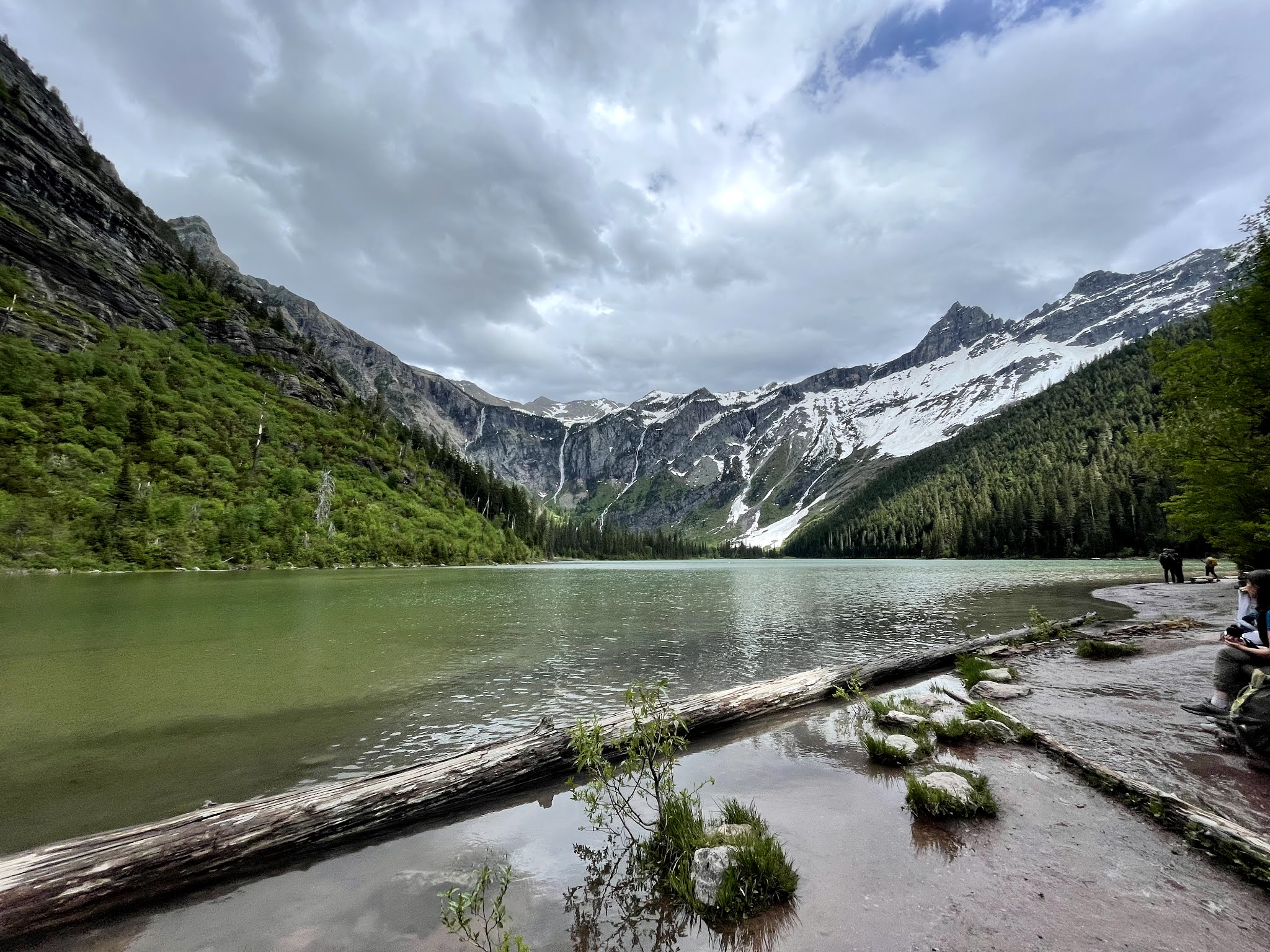
Saturday, the family went to Glacier National Park and hiked to Avalanche Lake, the same hike Pedro and I did on his first family pass in October of 2019. This hike bookended Pedro's experience in Montana.

Both he and I commented on what a difference there was between the hike this weekend compared to where we both were in 2019. This was my first visit to the Boy at his boarding school, and, by his own definition, he was "an angry douchebag."

On the 2019 hike, the late fall weather was cold and dreary, pouring rain for more than half of the hike. The Boy marched ahead, not talking to me and not telling me why he was angry. I felt helpless and frustrated and sad and angry. I didn't know what to do. When we got to Avalanche Lake, the Boy skipped stones for twenty minutes in the rain, trying to burn off some unspoken emotions. Looking back, I probably should have not tolerated that insolent and dismissive behavior. I probably should have have taken him back to campus and then driven back to Seattle.

This year, Pedro was much more enjoyable to be around. He walked along side me for most of the hike. He even commented on the change between the two hikes. At one point, he told me to hurry, but like "It is okay to take your time and get some water, but don't sit and meditate for twenty minutes." Which was fine as it was clear and direct communication. When we got to the lake, we both sat on a log. I told him this is where he could scatter my ashes when I die, if they allow that kind of thing in a national park.

"I can get a little boat and drop them in the middle of the lake," he said. "But I'd have a hard getting a boat out here."

"Maybe you could take a stand-up paddle board," I said. "You could strap the urn with my ashes to the front of the board and row out to the middle." We laughed.

In movies and books, things often come full circle at the end of a journey, but rarely does it happen so neatly in life. Yet, here we were, in the exact same spot, two years later, both changed people.

Maybe my dream of Pedro dying means that the old Pedro died, the one who was angry and hostile and sad and isolated. Perhaps this is where a new Pedro emerges. I know there is so much more ahead for both of us, so many good times and times again where he will be "an angry douchebag."

Perhaps I missed something in the dream. I didn't die in the dream, but the person I was on that hike two years ago is mostly gone, too. My spinning and obsessing about everything has dramatically slowed down, and I am getting comfortable in this new way of being. I am trying really hard not to try to control everything I cannot control. I am letting things evolve instead of trying to manage them.


Tuesday, June 1, 2021

Final Exam

Two years.

I hope I am ready to have Pedro home.

For the past two years, I have been in deep introspection, spending ten hours a week in therapy, recovery groups, or talking to Pedro on the phone. 

When we flew to Durango, Colorado two years ago to drop Pedro off at Wilderness, I didn't have any idea of where this would lead me. I have been on quite the journey. I feel like Bilbo Baggins, and now I am coming home from wrestling with the dragon. What have I been seeking?

Today, I finally got to the answer to two questions that have been driving my crazy, plaguing me since the Boy left for Wilderness. Today. Right under the wire.

What is the difference between ranting/raging and venting?

  • Ranting or raging is when someone is displacing their emotions and taking their anger out on someone else. Denial of the feelings is a necessary component of ranting and raging.  
  • Venting is when you are feeling your feelings, and letting them out is a safe place. There may be some denial is place, but the person who is venting is seeking to release pressure and to understand their feelings, not bury them or take them out on someone else. Venting this the ugly stage before curiosity and acceptance arrive.
This has been an epic dilemma for me for years and I finally figured it out.

Which directly leads me to my next question: What is the difference between enabling and empathy?
  • Empathy is when we are listening to someone tell their truth, quietly and without interruption, saying "I hear you and I stand beside you as you go through this challenging time."
  • Enabling happens when someone is displacing their emotions, and we let support them in their denial. Enabling is allowing people to not be accountable or responsible for their actions.
- Aho

Disaster Recovery & Grown Ass Man

I got a new job about two and a half months ago working in Disaster Recovery at a large corporation. The idea is that all IT applications need a plan so that they can be recovered in case of a disaster. Maybe there is a fire, or a major power failure where the computer systems needed to run the organization are shut down. Each team needs a plan to restore their applications. The next phase of this work is Business Continuity: How do you keep your systems up and running even in the face of a disaster? How can you avoid or prevent human caused disasters? Are your servers three years past end-of-life? Then why are you shocked that they failed?

I digress.

Pedro is graduating this week and returning to Seattle this summer, as you all know. Before he could come home, Jack, Pedro and I have been doing our own Disaster Recovery and Business Continuity planning. Over winter and spring, Pedro has been planning his MAPP -- Montana Academy Post Plan (MAPP) and his Relapse Prevention Program (RPP). Likewise, as parents Jack and I have been preparing ourselves for Pedro's return. Pedro can be changed, but if we don't change as well, the whole system will fall back into its old patterns. 

Planning is easy. Disasters are messy. I discovered that this weekend. The Boy had this habit that Pedro needs to get rid of.* The Boy would not feel his feelings and then express his hostility and anger towards me. Which I hated, but didn't know how to manage with him (or Jack for that matter when he would get all rage-y.) 

The Boy's therapist recommended I preemptively write the Boy and tell him that I don't like it when he takes his unfelt feelings about the world out on me. So I did. I told the Boy I don't want to be his emotional garbage can. He needs to clean this up, not just for me, but for any future relationship he has. His significant other doesn't deserve to be his emotional punching bag, either. And anyone with a solid sense of self will not put up with it for very long. If he doesn't fix it, he will find himself alone or in toxic and unhealthy relationships. Neither is good.

A week ago, we had a call with the Boy where he was hostile and angry for about two hours. It sucked and I was exhausted. This was not productive venting where he was actually talking about what he was feeling, like "I am really frustrated when....and I want to resolve this issue." This rant was "everything sucks and everyone is stupid." As the Boy called it himself, it was an emotional dumpster fire. Recognizing the problem is the first step.

Wednesday, he called again, but he was kind and gentle and apologized for his shit mood on Sunday. 

Apologies are nice and all, but what people also want from an apology (meaning me) is that the toxic behavior stops. The apology is meaningless if the same stuff keeps occurring. Now, this is where the Boy/Pedro gets a wee bit of slack. I would like to see progress and improvement, not perfection.

This weekend, the Boy called again and was hostile. 

And I was different. I was telling/asking him about plans for his graduation week, and he got pissy. I asked him why he was hostile. He continued to rant. 

"Why are you hostile?" I asked. 

To which he replied by hanging up the phone.**

I cried for ten minutes, thinking that I might be permanently estranged from my son. Once I felt my feelings of sorrow and talked about it, I felt better. I was able to settle down and then go to sleep without ruminating about it like I used to do.

Yay! Go me! Perhaps the weekend at the ocean helped prepare me to weather the storm.

The next morning, Pedro texted and meaningful and sincere apology. He called again last night to recover and repair.

Disaster recovered. 

Finally. 

He's a grown ass man. 

Treasures from the beach.


* The concept of switching his name within a sentence is perfectly appropriate. Sometimes my son is a boy, and other times as one of my dear friends would say, "He's a grown ass man." 

** To those born before cell phones were invented, "Hanging up the phone" is a phrase where you would take the phone handset and put it back in the cradle. The little button in the cradle would then disconnect the phone. Slamming the phone down was quite cathartic. Pushing the little red dot on the phone seems so much less so.